For years, we’ve talked about the need to build more electricity generation and strengthen the infrastructure to support growing demand. But even when a project is ready to move forward, getting connected to the electric grid can be a lengthy process.
Now, PJM is proposing a change. They’ve submitted a proposal to the Federal Energy Regulatory Commission (FERC) to cut its interconnection study process from about two years to one. Its proposed “Fast Energization Process” would review requests from large electricity users and new generation projects together, eliminating duplicative studies and potentially shaving an entire year off the process.
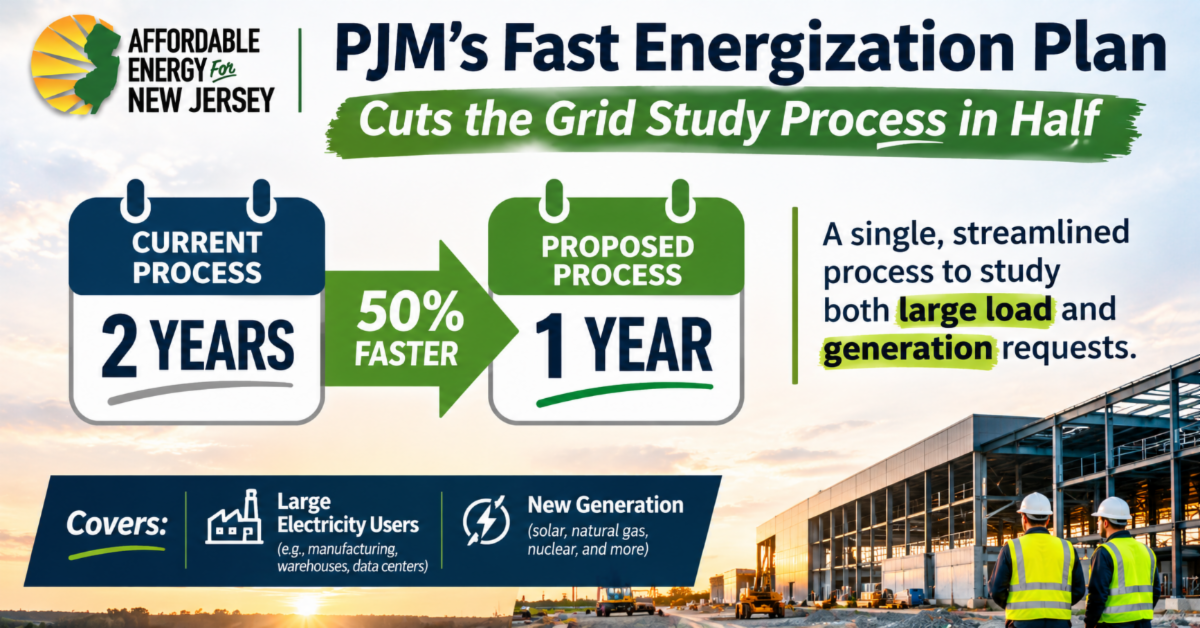
That’s a pretty significant change, especially when time is already working against efforts to bring more electricity onto the grid. And let’s be clear, this isn’t just about data centers. Large electricity users, including major manufacturing and industrial facilities, need reliable access to power before they can invest in projects that create jobs and expand the local tax base. Just as importantly, the proposal would streamline the study process for new electricity generation, whether that’s natural gas, nuclear, solar, or other resources.
In other words, PJM is looking to make it easier and faster to connect both the businesses that need electricity and the facilities that produce it.
The proposal follows FERC’s direction to grid operators nationwide to address concerns about how large electricity users connect to the system. PJM’s plan would also provide greater transparency into the infrastructure upgrades required for new projects and who should pay for them.
That matters for New Jersey. We’re part of a regional grid facing growing demand, and every delay in bringing new generation online makes it harder to close the gap between the electricity we need and the supply available. Of course, a faster study process doesn’t eliminate the need for permits, financing, construction, or other approvals. But removing unnecessary delays and duplicative reviews is a practical place to start.
FERC still needs to review PJM’s proposal, and the details may change. But the bigger point is worth considering: if we’re serious about affordability, reliability, and economic growth, we should look for ways to build needed infrastructure, not leave projects stuck in line.
We need more electricity, and we need a process that allows new supply and economic development to move forward without unnecessary delays. PJM’s proposal could help clear that bottleneck. Now federal regulators must decide how that process should work.]
About the Author: affordableenergy
