While New Jersey policymakers continue pretending like natural gas doesn’t have a future, the rest of the country is already living in it.
Reuters took a deeper look about the state of Natural gas around the country:
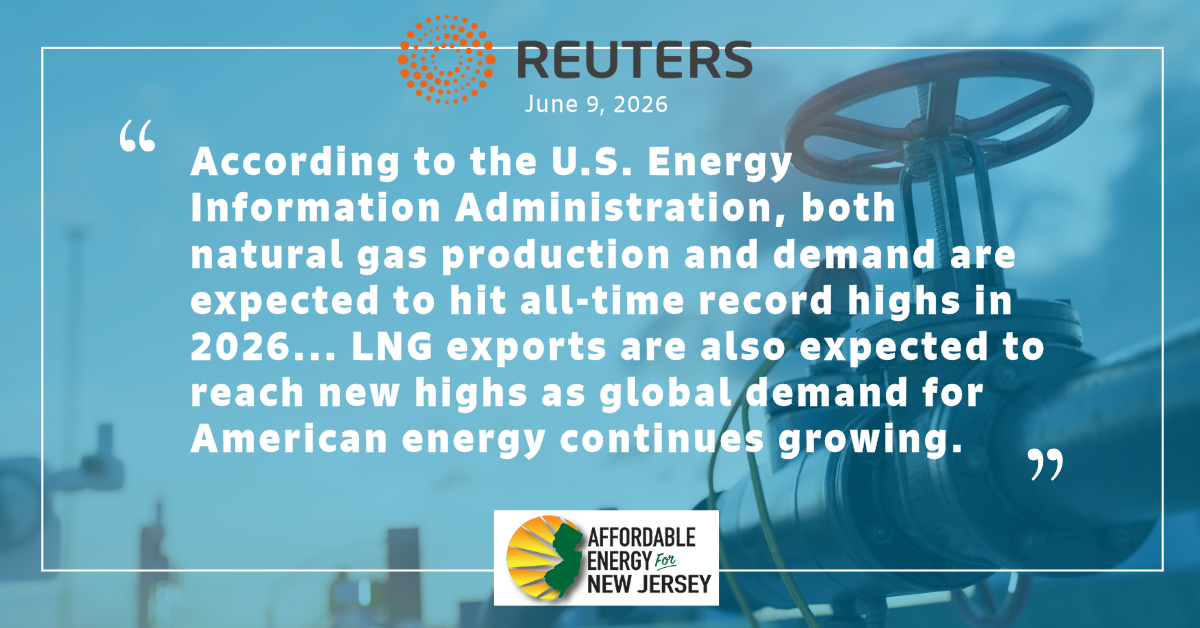
Think about that for a moment.
- Production is up.
- Demand is up.
- Exports are up.
- Data center electricity demand is up.
- Manufacturing demand is up.
- Power generation demand is up.
In other words, nearly every major energy trend in America is moving in one direction. Yet New Jersey continues acting as if natural gas is a shrinking industry that can simply be regulated out of existence.
That is despite the fact that the numbers, market and reality say otherwise.
Across the country, states are investing in infrastructure, expanding energy capacity, and preparing for future growth. Meanwhile, New Jersey continues to block pipeline projects, discourage investment, and make it harder to deliver affordable, reliable energy to families and businesses. The result is higher costs, greater reliability concerns and a growing competitive disadvantage as neighboring states position themselves to capture investment, jobs, and economic growth.
Here’s the uncomfortable truth: Natural gas isn’t disappearing. It’s growing. The EIA projects U.S. natural gas consumption will continue increasing through 2027 while production and exports set additional records. Even as coal generation declines, natural gas remains the backbone of America’s electric grid and a critical fuel for economic growth. The question isn’t whether natural gas will be part of America’s future.
The question is whether New Jersey wants to be part of that future—or keep watching it happen somewhere else. Because while the rest of the country is preparing for record demand, New Jersey is still arguing with the scoreboard.
About the Author: affordableenergy
