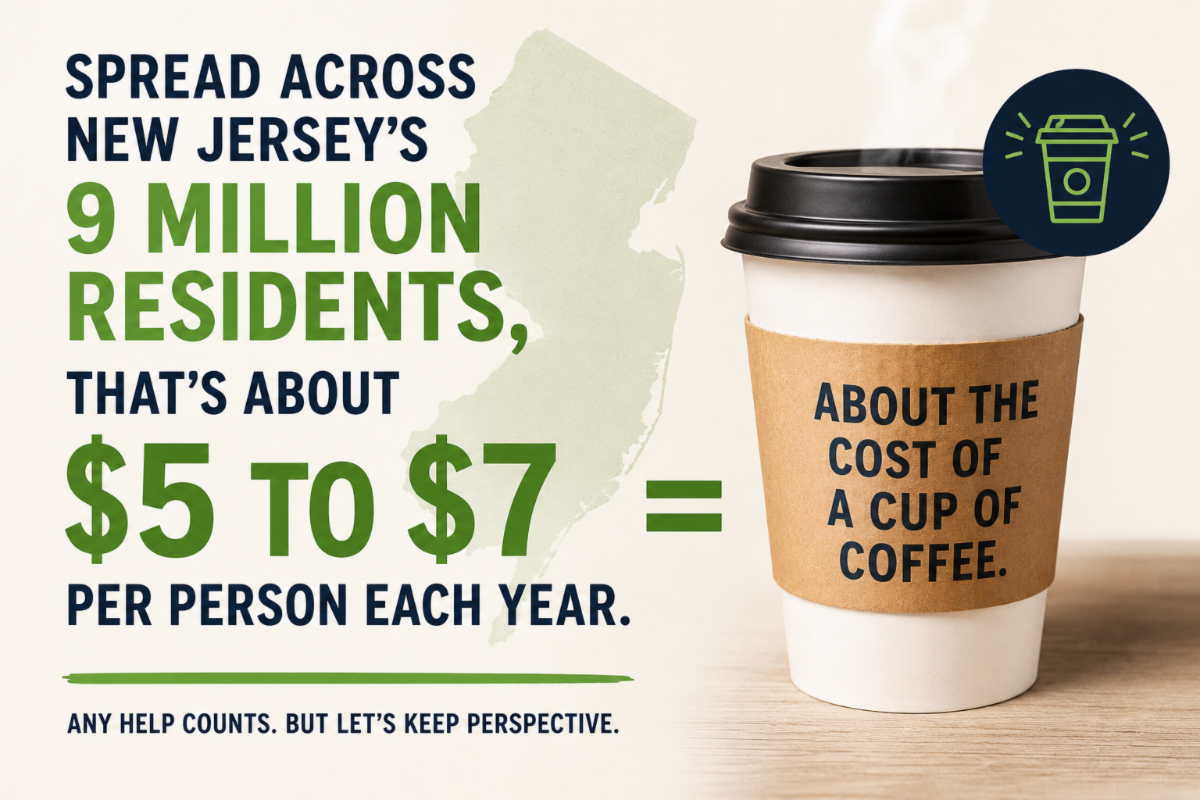
Last week lawmakers highlighted legislation that would repeal the PJM Return on Equity (ROE) Adder, a change estimated to save New Jersey ratepayers between $45 million and $60 million annually. With electricity costs high after a decade of bad policy – any and all savings are welcome. However, let’s put the numbers in perspective.
It is important to keep in mind that while this generous rate payer relief is being provided… we’re simultaneously removing another financial incentive for investment in the very transmission system we continue to rely upon. That raises a bigger question. Are we solving the problem…or simply celebrating around the edges of it?
Contrast that with the Regional Greenhouse Gas Initiative (RGGI).
Depending on annual auction proceeds, New Jersey ratepayers send hundreds of millions of dollars into the program. Leaving RGGI could save consumers and businesses several hundred million dollars annually—many times larger than the savings being touted last week and with more significant benefit.
That’s not an argument against pursuing smaller efficiencies. Every dollar matters. It is an argument for recognizing scale.
But micro savings are not a macro energy strategy.
New Jersey is entering a fundamentally different energy reality.
Demand is rising from data centers, electrification, manufacturing, AI, and economic growth. PJM has repeatedly warned about tightening reserve margins while generation struggles to keep pace with retiring plants. The question facing policymakers isn’t how to save six dollars.
It’s how to ensure families and employers have reliable, affordable electricity five, ten, and twenty years from now.
That requires bigger conversations.
- More generation.
- More transmission.
- Smarter permitting.
- A regulatory environment that attracts investment instead of discouraging it.
The action taken by the Legislature may trim a few dollars off the bill. But no one should confuse trimming around the margins with solving the affordability challenge. Because in the energy world we’re entering, the biggest costs won’t come from incentives. They’ll come from failing to build enough power.
About the Author: affordableenergy
