Recent comments from New Jersey Board of Public Utilities (BPU) President Ben Hertz-Shargel have shined a brighter light on the state’s ongoing effort to fundamentally change how utilities operate and invest.
While the stated goal of improving affordability and rewarding better customer outcomes sounds promising, some of the ideas discussed during a recent BPU hearing should raise serious concerns for New Jersey businesses, workers, and ratepayers.
At the center of the discussion is a shift toward performance-based ratemaking, where utilities would be rewarded for meeting certain goals rather than simply earning returns on infrastructure investments. In theory, that could benefit customers. But who gets to decide what constitutes good performance? If state regulators determine the metrics, the system could become another tool for directing utility investments toward the state’s preferred policies rather than what best serves customers.
One topic of particular concern that emerged during the discussions was the BPU’s active consideration of directing utility infrastructure investment dollars out of state to build new generation or make grid upgrades. Look specifically to this answer:
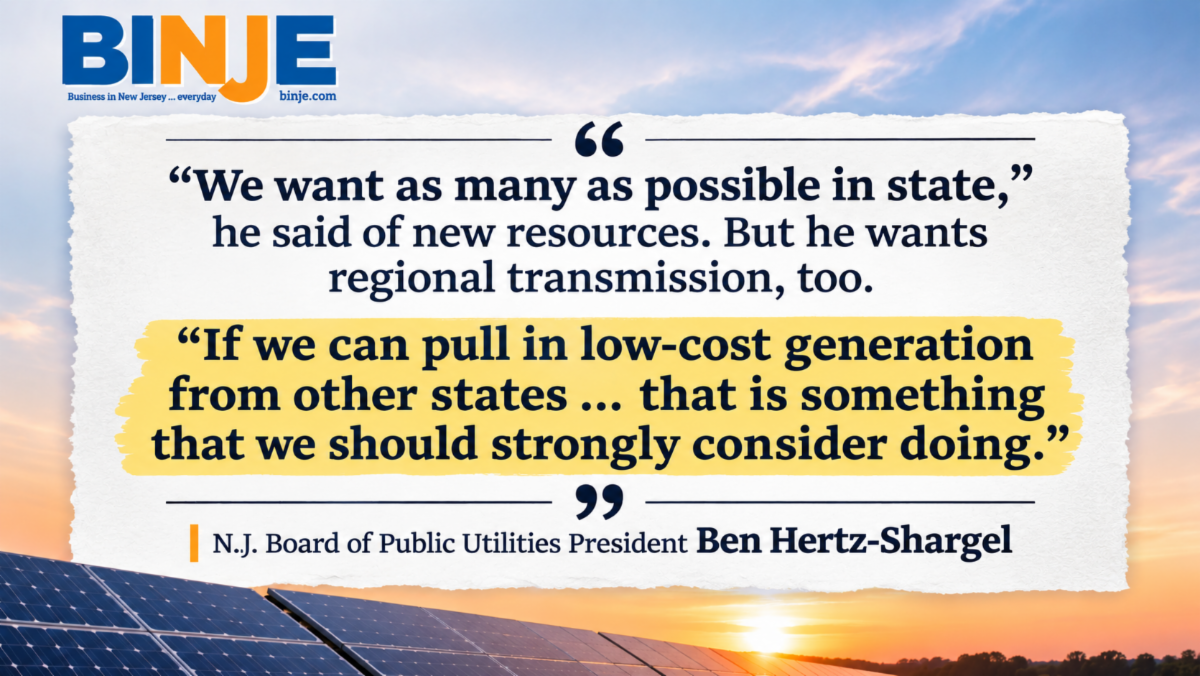
Let’s consider the consequences of those actions. New Jersey ratepayers and taxpayers could be forced to finance the construction of generation built in another state, all while that other state enjoys the construction jobs, ongoing maintenance work, local tax revenue, and broader economic benefits. Meanwhile, getting that electricity back to New Jersey could require additional transmission investments and costs that ultimately show up on customers’ bills. We could end up paying to build the power somewhere else, paying to bring it here, and losing the economic benefits of building it ourselves.
There is nothing wrong with examining ways to improve utility performance or recognizing the value of our interconnected regional grid. New Jersey already benefits from generation across state lines. But deliberately steering investment away from New Jersey is a very different proposition. Before rewriting the rules of the utility business, state leaders need to consider the full economic consequences, not just the upfront price tag. Affordability should mean lowering the total cost to New Jersey customers, not simply shifting where the money gets spent.
About the Author: affordableenergy
