The best infrastructure investments are often the ones no one notices.
- The cyberattack that never interrupts water service.
- The attempted breach that never reaches customer information.
- The aging equipment replaced before hackers can exploit it.
- The backup system ready when something goes wrong.
Those protections cost money. When they work, nothing happens.
That matters as New Jersey water systems confront another wave of cyberattacks targeting utilities nationwide.
Since July 27, utilities in at least seven states have reported incidents to the FBI. Hackers accessed internet-connected controls, changed passwords and IP addresses, and disrupted operators’ ability to monitor equipment. The attacks caused water-pressure losses and flooding, creating the risk that untreated groundwater could enter pipes. And this threat is not new:
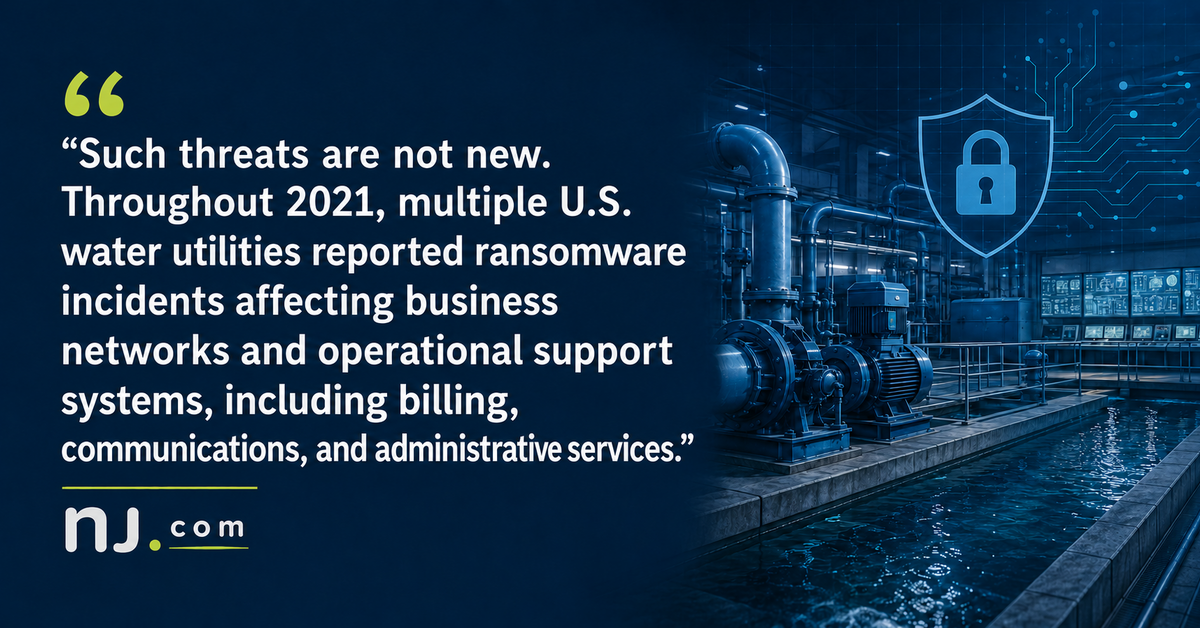
New Jersey is not watching this threat from a distance. NJ.com reports that water systems in the state were among those targeted.
And this is not the first warning.
In October 2024, Camden-based American Water detected unauthorized network activity and responded by bringing in cybersecurity experts, notifying law enforcement, and taking systems offline. Water service and quality were not affected, and the systems were restored once deemed secure. That was not luck. It was preparation.
Ratepayers deserve transparency and accountability for every dollar utilities spend. But serious oversight also requires recognizing what those dollars support: modern equipment, secure networks, protected customer data, emergency response capabilities, backup systems and employees trained to keep essential services operating during an attack.
Cybersecurity is not an optional technology upgrade. When hackers can interfere with the systems controlling water pressure, pumps and treatment facilities, cybersecurity becomes public safety.
We should absolutely scrutinize infrastructure spending. We should also understand the cost of failing to make it.
About the Author: affordableenergy
