For years, NJ has sought quick fixes for rising electricity bills.
- Cap prices.
- Change auction rules.
- Shift costs.
- Find someone to blame.
This week, the state released a report that reaches an important conclusion: There is no silver bullet. That’s an important admission. Because while there are steps that may help around the margins, none of them change the underlying problem.
New Jersey simply needs more electricity.
That same reality was reinforced this week when PJM released the results of its latest capacity auction. For the third auction in a row, the market hit its price cap. More importantly, the region again fell well short of the generation needed to comfortably meet future demand.
Those aren’t separate stories. They’re the same story. Demand continues to grow faster than supply.
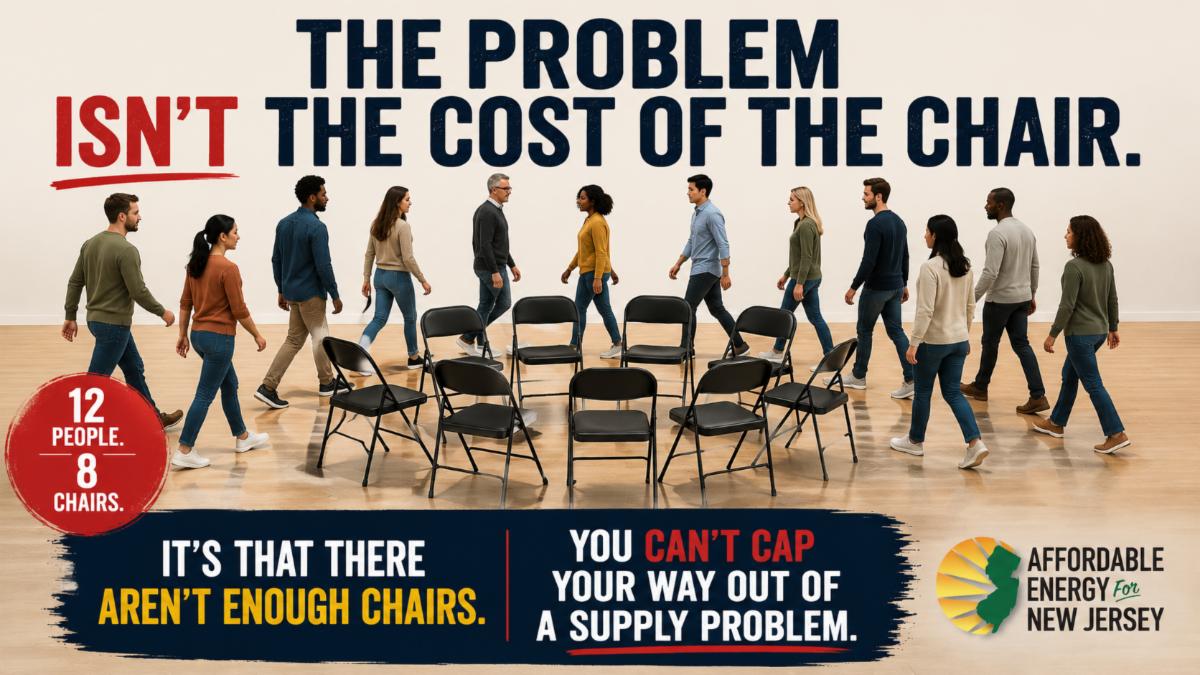
You can’t cap your way out of a supply problem. You have to build your way out of it. And the state’s report provides a roadmap.
If New Jersey is serious about making electricity more affordable over the long term, the conversation has to move beyond temporary fixes and start focusing on lasting solutions.
- That means removing policies that unnecessarily increase costs.
- That means allowing utilities to invest in new in-state generation.
- That means expanding transmission where it’s needed.
- Most importantly, it means building significantly more dependable, dispatchable baseload generation capable of producing electricity whenever NJ needs it.
One thing the report doesn’t address is New Jersey’s continued participation in the Regional Greenhouse Gas Initiative (RGGI), despite the added costs the program imposes on consumers. If affordability is truly the goal, every policy that affects electric bills should be part of the conversation.
The good news is that the roadmap is becoming clearer. The challenge now is whether policymakers are willing to follow it. Because every credible analysis keeps arriving at the same conclusion.
We aren’t facing a pricing problem alone. We’re facing a supply problem. And until we build more reliable power, New Jersey families and businesses will continue paying the price.
About the Author: affordableenergy
